
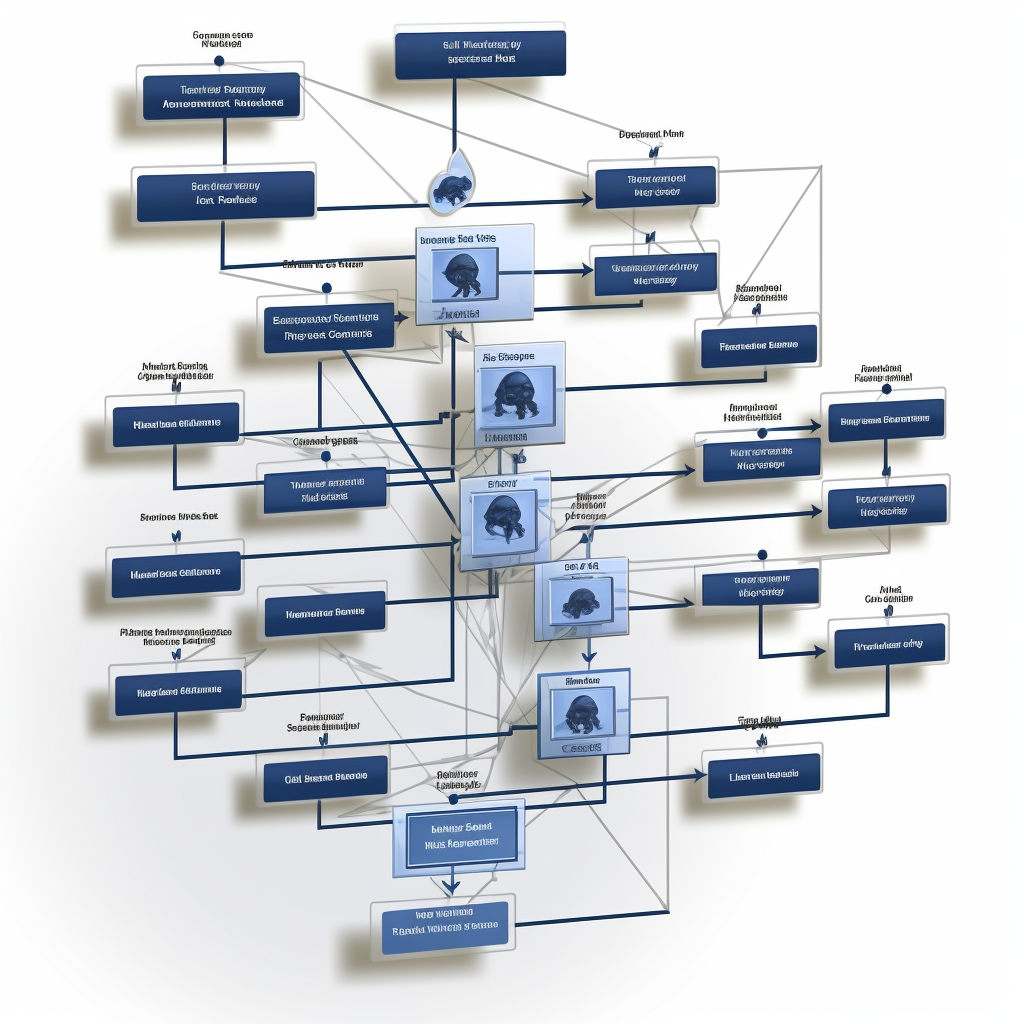
In the dynamic world of the internet, it is essential that websites are well organized and easily accessible to search engines. This is where the sitemap comes into play, an effective tool that serves as a bridge between website owners and search engines. Let's dive deeper into this world and understand its importance and how it works. Understand with us why SEO is also built on it.
Definition and meaning
Sitemaps, also known as page maps, are hierarchical lists of all documents or web pages of an online presence. They provide a clear overview of the entire structure of the website, including all subpages. They were originally developed to make websites easier to navigate by displaying them in an additional frame next to the main content. This allowed visitors to navigate from one page to the next without having to access each link individually.
Nowadays, navigation systems are in most cases much simpler and more intuitive. Nevertheless, the page map retains its relevance as it increases user-friendliness and allows search engines to access these files. It acts as a kind of „map“ of the website, helping search engine crawlers to find and index the content more efficiently.
Types of page overview maps
There are two main types of page maps: XML and HTML. Both have their own specific functions and advantages:
XML sitemaps
XML page maps have been specially developed for search engines. These text-based files contain all URLs within the website and help the crawlers to discover and index important pages more quickly. You can provide additional information for each URL, such as the frequency of updates and the priority of the content. This enables more efficient indexing and helps to improve the visibility of the website in search results.
HTML sitemaps
Unlike XML, HTML page maps are more geared towards human visitors. They allow users to navigate the website more effectively by providing a clear and structured overview of all essential pages. This not only improves the user experience, but can also help to increase the time spent on the website.
SEO and sitemaps
The page map is an essential tool in search engine optimization (SEO). It helps web crawlers or searchbots to crawl the internet more efficiently and to find and index information. By providing a clear index that contains all pages, indexing is simplified, especially for large websites or pages that are not well linked to other websites. Both types of page maps are equally important in the SEO context, as they can improve usability and potentially contribute to a better ranking in search results.
Practical applications and tips
If you run a website, it is advisable to create both an XML and an HTML sitemap. While the XML variant ensures that search engine crawlers can easily find and index all important pages of your website, the HTML variant helps your visitors to easily find their way around your website.
It is also important to update them regularly, especially when you add new content or change existing pages. This ensures that both search engines and visitors always have access to the most up-to-date information.
Use WordPress
WordPress installations often have neither an HTML nor an XML version of the page overview. This is not least due to the fact that people have no knowledge of the importance of this technology. So it is absolutely essential for good SEO that one is available. A file can either be created manually or a plugin can be used. No matter how you decide. This is a must have for you as a website owner.

Further resources
For more information and instructions on how to create and manage sitemaps, you can visit the following resources:
- What is a sitemap and why is it important for SEO - Hostinger
- What is a sitemap | Google Search Central
By deepening your knowledge, you can improve the online presence of your website and provide a better user experience.
 German
  English
  French
  Italian