
Data-driven campaigns: More success through intelligent use of data
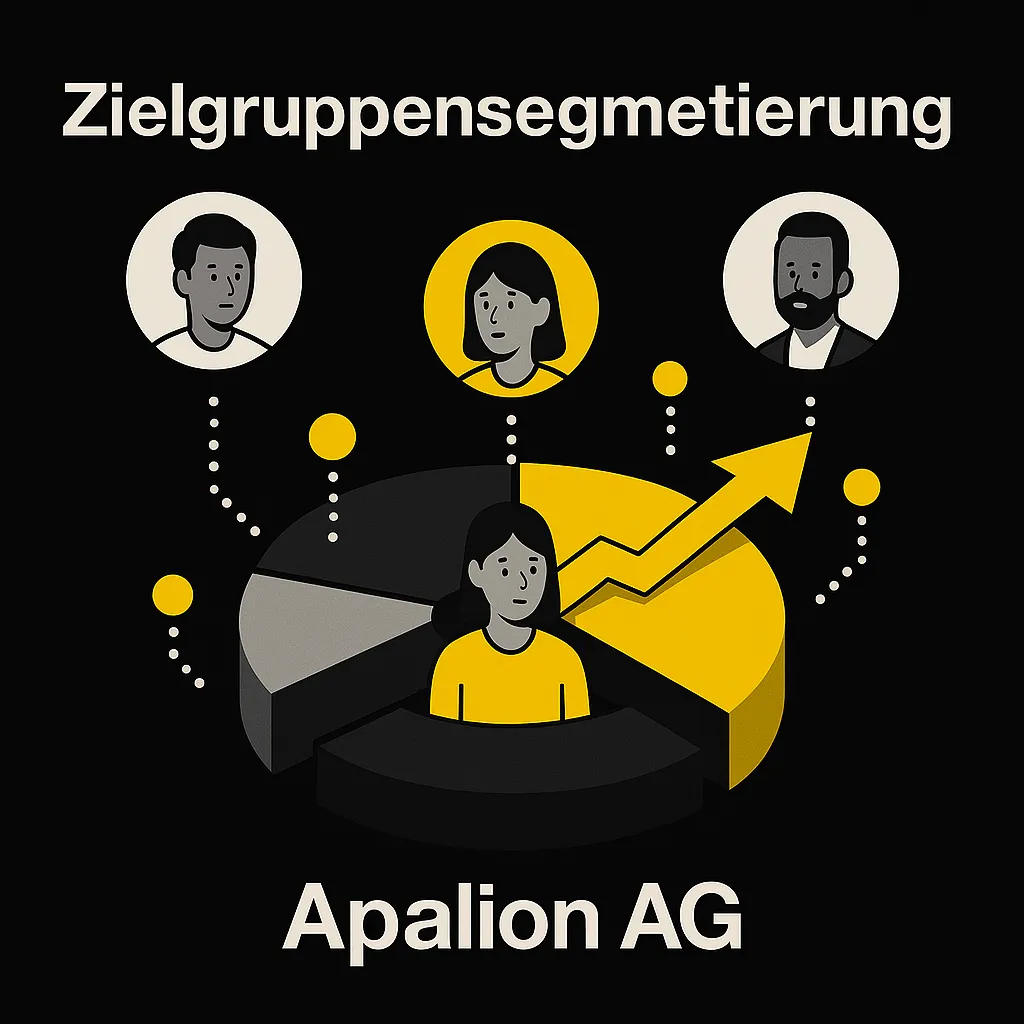
In today's marketing world, you have no doubt heard many times that facts, figures and data (data in the sense of information from various sources) are playing an increasingly important role. But what does it actually mean when we say: „Data-driven campaigns, we rely on clear facts and figures to make effective use of your marketing investments“? Quite simply, it's about basing your marketing decisions not just on gut feeling or years of experience, but systematically learning from data and optimizing your strategies and campaigns based on it.
In this comprehensive guide, you will discover how data-based marketing initiatives work, what advantages they offer you, what specific steps you should take and how you can always keep an eye on your target group despite all the technology.
You can look forward to many practical examples, a clear guide and concrete recommendations for action so that you can get started right away. And so that you can really feel how relevant the topic is, I will show you step by step how to successfully establish „Data-driven campaigns, we rely on clear facts and figures to use your marketing investments effectively“ in your company.
APALION MARKETING AG
What are data-driven campaigns? Definition and goals
Data-driven campaigns (data-based marketing campaigns) are strategies in which you use systematically collected information (e.g. user data, click behaviour, transactions) to control and optimize your marketing activities. Instead of just relying on assumptions, you analyze actual behavior and can therefore make precise decisions.
Goals of data-driven campaigns
Increased efficiency
You use your marketing budget in a more targeted way and avoid wastage.
Personalization
Through precise data analysis, you can better understand your target group and address them with individually tailored messages.
Measurability and transparency
You can see which measures work and which don't, so that you can continuously improve.
Long-term growth
Satisfied customers, higher conversion rates (ratio between website visitors and actions taken) and increasing sales are the result.

APALION MARKETING AG NEWS
„Data-driven campaigns“ is a very big topic, so there is always news.
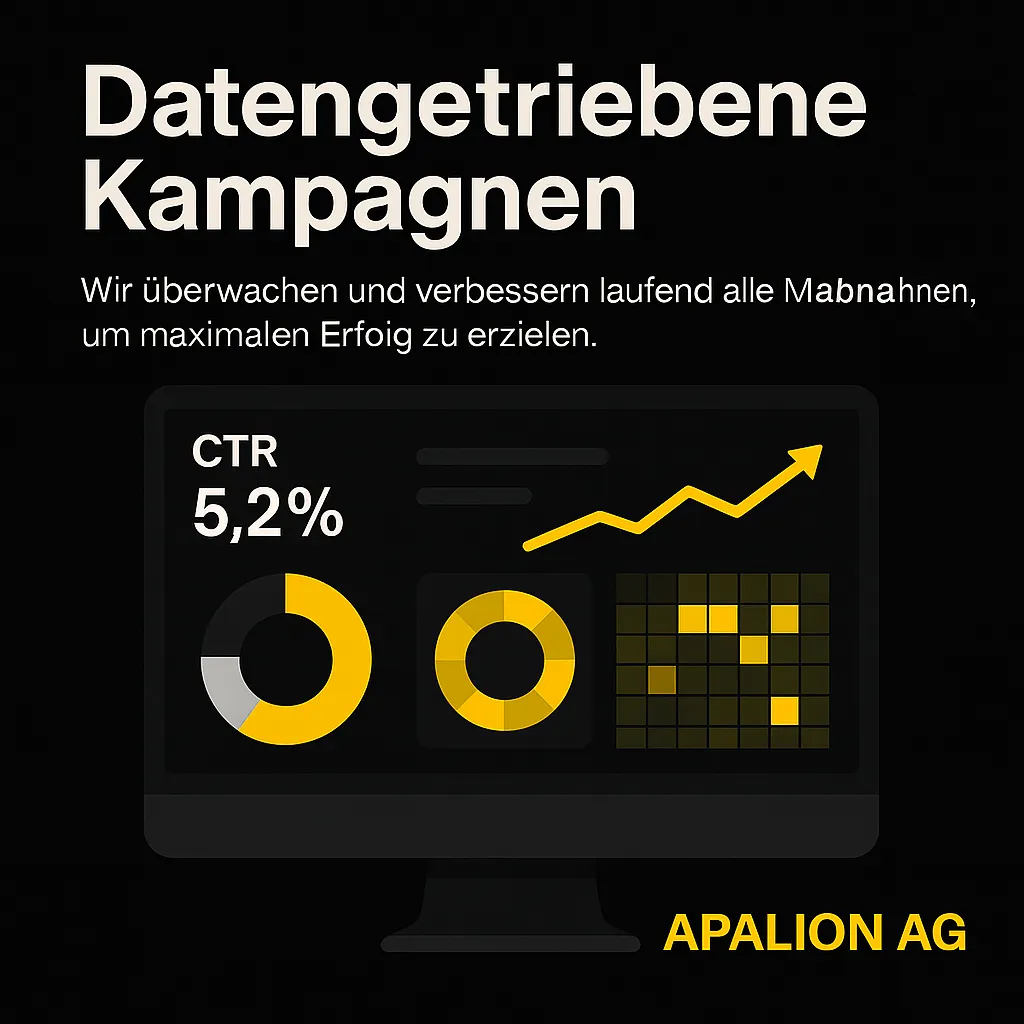
The most important advantages of data-driven campaigns at a glance
We rely on clear facts and figures to make effective use of your marketing investments: You gain clarity, save costs and achieve more success in your marketing activities.
Measurability and proof of success
Data-driven campaigns allow you to use specific key performance indicators (KPIs) to check whether your marketing strategies are working. You can precisely determine the return on investment (ROI) and adjust your decisions accordingly.
Personalization and targeted approach
By collecting specific user data (information on behavior on the website, interest in certain products), you are able to create individually tailored offers. This increases the relevance of your messages and increases the likelihood that visitors will become customers.
Continuous optimization
With data-driven campaigns, you can constantly adapt your strategies. You immediately recognize when a measure is no longer working and can replace or improve it. This saves you time and budget.
Competitive advantage
Companies that invest in data-based strategies at an early stage gather valuable insights and can recognize trends more quickly. This keeps you one step ahead of your competitors.
Scalability
A data-driven approach can be easily expanded. Whether you are a small start-up or a corporation with an international presence, the data infrastructure can grow with your requirements.
APALION MARKETING AG
Relevant data sources and data protection for campaigns
Data-driven campaigns, We rely on clear facts and figures to use your marketing investments effectively, based on different data sources. You can find a summary here so that you always have an overview:

Web analysis tools
Google Analytics, Matomo or similar platforms offer you insights into the behavior of your website visitors.

Social media data
Likes, shares, comments and follower numbers provide information about the interests and interaction habits of your target group.

Surveys and feedback forms
Direct customer opinions (opinions of your target group) are valuable sources for refining your campaigns.

CRM systems
Information on existing customers and leads (potential customers) helps to create individually tailored offers.

E-commerce platforms
Orders, returns and shopping cart analyses provide information about purchasing habits and product preferences.

External market data and studies
Industry reports, Competitive analyses and external Market studies expand yours View about the own Data beyond. You help in the process, Trends early to recognize and yours Campaigns strategic to position.
Would you like you also one Note to the Topic Data protection and GDPR supplement?
Start now with a free initial consultation
Apalion marketing ag
Step-by-step guide: How to implement data-driven campaigns
We rely on clear facts and figures, so you need a structured roadmap to get your marketing investments off to a successful start. Here are the most important steps:
Define objectives and key performance indicators (KPIs)
Ask yourself: What specifically do you want to achieve? More leads, more sales, greater brand awareness, etc. Select suitable key figures, such as conversion rate, click-through rate (CTR) or revenue per customer.
Collect and process data
Use tools such as Google Analytics for web statistics.
Integrate your CRM (Customer Relationship Management) to analyze information about existing customers.
Pay attention to clear tracking parameters (parameters for identifying individual campaigns) in your advertising media.
Analysis and interpretation
Pay attention not only to pure figures, but also to trends. Do your sales figures increase on certain days of the week? Are there peak times?
Identify weak points: At what point do visitors bounce?
Develop strategy and campaign concept
Based on your findings, you determine which channels (e.g. search engines, social media, newsletters) you want to use.
Create creative advertising material and landing pages that suit the target group.
Implementation and testing
Start your campaign in the selected channels.
Carry out A/B tests (method for comparing two variants) to find out which message or design works better.
Monitoring and continuous optimization
Review your KPIs regularly and adjust your strategy if results fall short of expectations.
Use automated reports or dashboards to get a quick overview at any time.
Performance measurement and evaluation
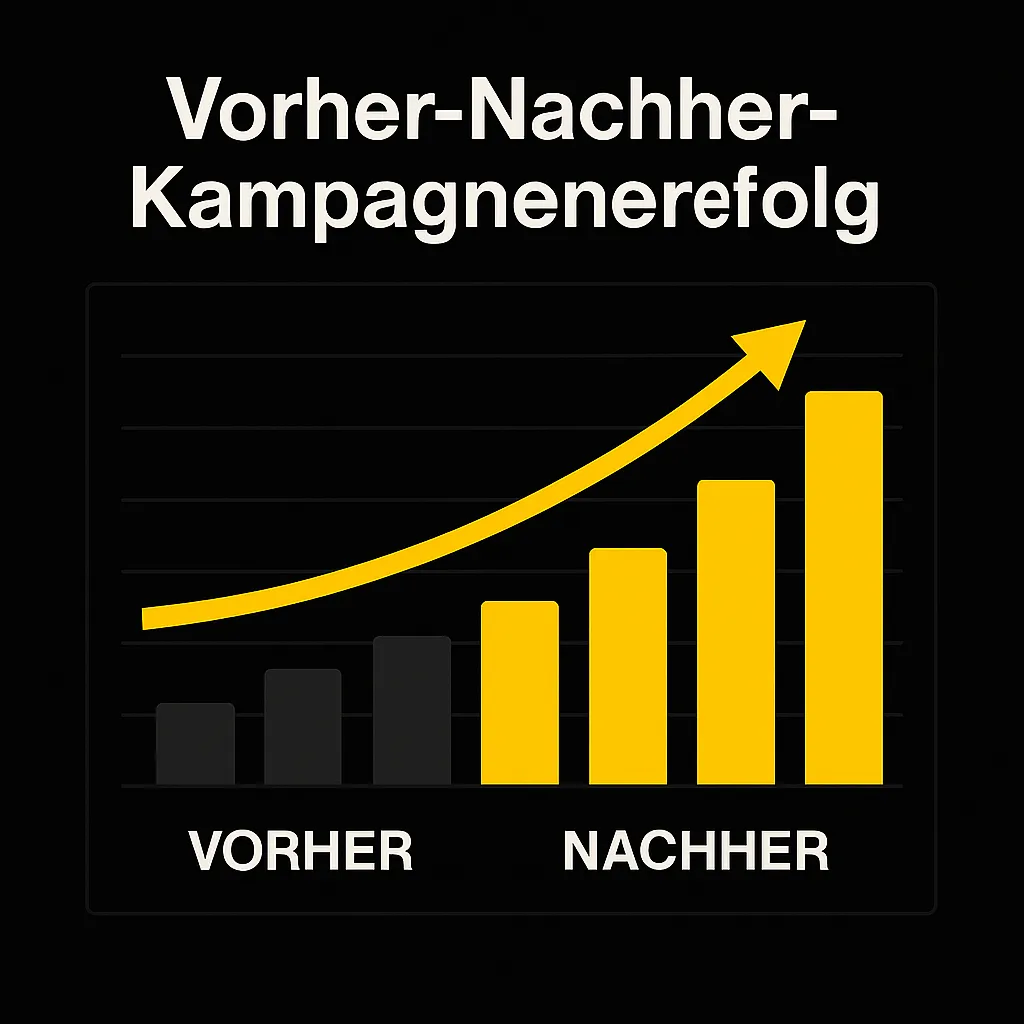
At the end of a campaign period, you evaluate which measures were particularly successful and what you can improve next time.
Conclusion: Use psychological triggers and insights from neuromarketing to place your marketing messages effectively. In this way, you will benefit from measurable marketing success that is not only based on figures, but also on an understanding of human decision-making processes.
Data-driven campaigns
Challenges and success factors of data-driven campaigns
As convincing as data-driven campaigns sound, they are not without their stumbling blocks. Here are some important aspects to keep in mind:
Poor or incomplete data sets lead to wrong decisions. Make sure that you collect high-quality information and check it regularly.
Data-driven marketing initiatives require reliable tools and systems. Make sure your platforms are scalable and work together smoothly.
Data analysts and marketing experts with a deep understanding of numbers are in demand. Invest in further training (workshops, training courses) or get external specialists on board.
Successful data-driven campaigns, We rely on clear facts and figures to make effective use of your marketing investments, usually require collaboration between IT, marketing, sales and often external partners. Open communication is the key.
As already mentioned, you must comply with the legal requirements. Otherwise you could face fines and damage to your image.
If you use customer data, it is important to be transparent. Show your customers that you respect their privacy.
Typical mistakes that slow down your measurable marketing success
As simple as it sounds, in practice there are a few pitfalls that can jeopardize your measurable marketing success. Here are a few of the most common mistakes and how to avoid them:
Individual advice
We take the time to get to know your goals, your company and your target group in detail.
Strategic planning
Together, we develop a customized plan that covers all relevant channels - from SEO to neuromarketing.
Implementation and monitoring
We support you in the concrete implementation and continuously monitor the results so that we can react quickly to changes.
Long-term support
Our goal is to enable you to achieve sustainable success. That is why we will continue to support you with advice and assistance in the future.
If you would like to find out more about our services, please visit our APALION website or contact us directly for a no-obligation consultation.
Challenges and success factors of data-driven campaigns
As convincing as data-driven campaigns sound, they are not without their stumbling blocks. Here are some important aspects to keep in mind:
Data quality
Poor or incomplete data sets lead to wrong decisions. Make sure that you collect high-quality information and check it regularly.
Technical infrastructure
Data-driven marketing initiatives require reliable tools and systems. Make sure your platforms are scalable and work together smoothly.
Skills shortage
Data analysts and marketing experts with a deep understanding of numbers are in demand. Invest in further training (workshops, training courses) or get external specialists on board.
Interdisciplinary cooperation
Successful data-driven campaigns, We rely on clear facts and figures to make effective use of your marketing investments, usually require collaboration between IT, marketing, sales and often external partners. Open communication is the key.
Data protection and compliance
As already mentioned, you must comply with the legal requirements. Otherwise you could face fines and damage to your image.
Confidence building
If you use customer data, it is important to be transparent. Show your customers that you respect their privacy.
Practical examples: Successful data-driven campaigns and their benefits
To make it even clearer what benefits data-driven campaigns offer you, let's take a look at a few specific cases. These examples often come from well-known companies that implement data-based strategies in an exemplary manner.
Philips: Content optimization through targeted data analysis
Usefulness:
Philips took a close look at the data of its website visitors and recognized which topics were most frequently searched for. The content was then adapted and tailored to these topics. The result: a significant increase in conversion rates because interested parties found the right information more quickly. In addition, targeted data analyses sustainably improved the user experience (positive customer experience).
Netflix: Personalized recommendations for more customer loyalty

Netflix thrives on data-based suggestions. By constantly evaluating usage data (viewing habits, ratings), series and films can be recommended in a tailored manner. This increases usage time and customer satisfaction - a prime example of how data can be converted into direct customer loyalty.
Adobe: A/B testing for continuous campaign optimization
Adobe consistently uses A/B tests to compare different layouts, texts and call-to-actions. This noticeably increases the ROI (return on investment) because the variant that is best received by the customer is always used.
Apple: Targeted retargeting with personalized advertising messages

Apple uses collected user data to retarget people who were already interested in certain products (retargeting). This leads to a higher probability that users will buy a product after all. The result: more efficient targeting and higher conversion rates.
Weather Channel: Location-based advertising for more relevance

The Weather Channel displays advertisements based on the current location and weather conditions. For example, an umbrella or a delivery service can be advertised for users who are currently experiencing rain. This increases click rates as the ad is particularly useful at that moment.
B2B consulting: transparency and efficiency through data

In B2B scenarios (business-to-business, i.e. transactions between companies), data-based automation is used for reporting. These automated reports save time and provide detailed results at the touch of a button. This gives decision-makers a quick overview and enables them to make more targeted investments.
Healthcare e-commerce: marketing insights for better management
In the area of healthcare e-commerce (online trade in healthcare products), comprehensive analyses enable precise control of advertising activities. Customer data (e.g. purchasing behavior, interest in certain products) shows which forms of advertising are effective. The result: greater efficiency through targeted budget allocation and less wastage.
Conclusion and outlook: The future of data-driven campaigns
Data-driven campaigns, We rely on clear facts and figures to make effective use of your marketing investments, are no longer just hype, but a decisive factor for sustainable business success. The possibilities for data collection and analysis are constantly growing, and new technologies (e.g. artificial intelligence, machine learning) are opening up more and more opportunities for personalized and efficient advertising.
Always remember: successful data-based strategies are not just a technical matter. You need a team that understands and interprets data and uses it to develop creative ideas for your target group. This is the only way to keep your campaigns alive and inspire your customers in the long term.
FAQ: Data-driven Campaigns
What are data-driven campaigns?
Data-driven Campaigns are Marketing strategies, the on systematic raised and evaluated Data based. You help you, Target groups better to understand, Contents to personalize and yours Budget more targeted insert - for more Efficiency and Success.
What data is used for data-driven campaigns?
To the Use come u.a. Web analyticsData, CRMInformation, SocialMedia-Insights, Transaction data from store systems and Results from Surveys. Important is thereby always: Data protection note and only relevant Data use.
Why are data-driven campaigns more effective than traditional approaches?
Because them on real User behavior and concrete KPIs are based on. The reduced Scattering losses, increased the ConversionRate and provides for one better Customer loyalty - well-founded and comprehensible.
How do I get started with data-driven marketing?
Start with clear Targets and defined KPIs. Subsequently collect you relevant Data, analyze them and develop on it based yours Campaign strategy. A/B-Tests and running Optimization belong to also in addition.
Are data-driven campaigns only suitable for large companies?
No. Also small and middle The company benefit from data-based approaches. Many Tools are scalable and leave itself on each Budget customize.
 German
  English
  French
  Italian